
Actions Are Judged by Intentions – Full Hadith Explanation

One of the most foundational teachings of Islam is the famous hadith:
“Actions are judged by intentions.”
Narrated by Muhammad (s.a.v.), this hadith establishes the core principle that the value of every action depends on the sincerity behind it. Scholars call this “the hadith of intentions” and consider it the foundation of all acts of worship.
It appears at the beginning of major hadith collections such as Sahih Bukhari and Sahih Muslim because of its importance.
1. Text of the Hadith
Arabic
إِنَّمَا الْأَعْمَالُ بِالنِّيَّاتِ
وَإِنَّمَا لِكُلِّ امْرِئٍ مَا نَوَى
Transliteration
Innamal-a‘mālu bin-niyyāt,
wa innamā li-kulli mri’in mā nawā.
Meaning
“Actions are judged by intentions, and every person will have only what he intended.”
2. The Context of the Hadith
The hadith was narrated by ‘Umar ibn al-Khattab (r.a.).
It teaches that Allah (c.c.) does not judge actions based solely on their outward form — but on the sincerity, purpose and inner motivation of the heart.
Even two identical actions may be completely different in value depending on the intention behind them.
3. Key Lessons from the Hadith
⭐ 1. Sincerity (Ikhlāṣ) is the foundation of worship
An act of charity, prayer, fasting or learning has value only when done for the sake of Allah (c.c.).
⭐ 2. Hidden intentions can make a small action great
Even simple acts — smiling, helping parents, speaking kindly — can become acts of worship if the intention is pure.
⭐ 3. A good intention transforms routine into worship
Eating, resting, working, or earning money can all become rewarded acts if the intention is righteous.
⭐ 4. A corrupt intention spoils a good deed
Showing off (riyā), seeking praise, or doing religious acts for reputation nullifies their reward.
⭐ 5. Intention is a personal, private act
Only the individual and Allah (c.c.) know the truth of the heart.
4. Practical Examples
Prayer
Two people pray two rak‘ahs.
One prays out of duty, the other prays with humility and sincerity.
The difference in reward is enormous.
Charity
A small donation with sincerity is better than a large donation given for praise.
Seeking Knowledge
If the intention is to benefit others or grow closer to Allah (c.c.), the knowledge becomes a path to Jannah.
Marriage & Work
Working to support one’s family becomes an act of worship.
Marriage done with the intention of building a righteous home earns divine reward.
5. How to Purify Your Intention
✔ Ask yourself: “Why am I doing this?”
✔ Renew your intention before and during the action
✔ Avoid showing off or seeking praise
✔ Remember that Allah (c.c.) sees the heart
✔ Keep good deeds private when possible
✔ Make dua:
“O Allah, purify my intention for Your sake alone.”
6. Why Scholars Consider This Hadith a Pillar of Islam
- Many scholars start their books with it
- Ibn al-Mubarak said it covers one-third of knowledge
- Imam Shafi‘i said it enters 70 chapters of fiqh
- It is the foundation of sincerity, accountability and inner purification
This hadith shapes the heart before shaping the action.
Bu yazıyı sevdiklerinle paylaş 👇
Tek tıkla WhatsApp’ta hazır mesajla gönder.
FAQ – Actions Are Judged by Intentions
1. What does “actions are judged by intentions” mean?
It means Allah (c.c.) rewards or judges actions based on the purpose and sincerity behind them, not just the outward act.
2. Why is intention (niyyah) important in Islam?
Because the value and acceptance of any deed depend on sincerity. Without intention, an action has no spiritual weight.
3. Do I have to say my intention out loud?
No. Intention is an action of the heart. You do not need to verbalize it.
4. Can a good intention turn daily activities into worship?
Yes. Eating, working, exercising or resting can all become acts of worship with the right intention.
5. What invalidates sincerity?
Showing off (riyā), seeking praise, doing deeds for reputation or worldly gain.
6. Can intentions change during an action?
Yes. You may renew and purify your intention at any time — before, during or after the action.
Dua for Protection – Powerful Islamic Supplications (Hasbiyallah, Last 3 Surahs, Ayatul Kursi)
Dua for Stress, Worry and Anxiety – Powerful Islamic Supplications
Dua for Illness and Healing (Shifa) – Powerful Islamic Supplications
Ayatul Kursi – Meaning, Tafsir and Virtues
Dua for Forgiveness (Astaghfirullah) – Meaning, Virtues & Daily Practice
Siz Ne Düşünüyorsunuz?
Bu konu hakkındaki görüşlerinizi, sorularınızı veya katkılarınızı yorum kısmında paylaşabilirsiniz.

Benzer Konular
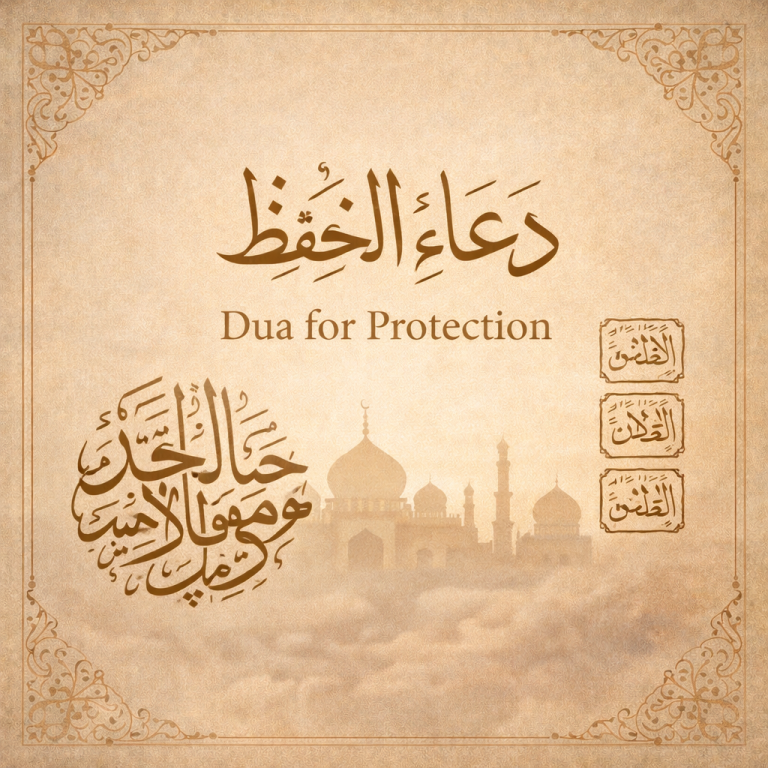
Islam provides powerful daily duas for protection against harm, fear, envy, unseen dangers and spiritual negativity. These duas were taught by Muhammad (s.a.v.) and are essential parts of the morning and evening adhkar. The most well-known protection duas are: Aşağıda hepsini tek tek anlamları ve faziletleriyle hazırladım. 1. Hasbiyallah La...

Evening Adhkar are the daily supplications taught by Muhammad (s.a.v.) to protect the believer after sunset until the next morning. These adhkar bring calmness, protection from the unseen, spiritual strength, and forgiveness. They are ideally recited after Maghrib until midnight, but the best time is right after sunset. 1. Ayatul...

Traveling is a moment of vulnerability and hope. Islam provides a beautiful set of duas that protect the traveler, bring ease, and remind the believer that the journey is ultimately under the care of Allah (c.c.). The Prophet Muhammad (s.a.v.) recited specific duas when leaving for a journey, when mounting...

Islam places enormous emphasis on character, empathy and sincere concern for others. One of the most comprehensive teachings on this topic is the prophetic saying: “None of you truly believes until he loves for his brother what he loves for himself.” This hadith explains that true faith is not only...

Parents hold one of the highest positions in Islam. The Qur’an repeatedly commands kindness, gratitude, and gentle treatment toward them. One of the most beautiful and meaningful supplications is the dua: “Rabbirḥamhumā kamā rabbayānī ṣaghīrā.” This short dua includes mercy, gratitude, and a deep emotional bond. It is recommended for...
Dua During Hardship – The Supplication of Prophet Yunus (A.S.) Hardship, fear, confusion and emotional pressure are part of every believer’s life. Islam offers a short but incredibly powerful dua that removes distress and brings immediate relief. This is known as the Dua of Prophet Yunus (A.S.), recited from the...

Ayatul Kursi (Surah Al-Baqarah, 2:255) is one of the most powerful verses of the Qur’an. It describes the absolute majesty, knowledge and sovereignty of Allah (c.c.), and serves as a protection, a source of calmness and a reminder of divine guardianship. Muslims around the world recite it in the morning,...

Morning Adhkar are daily supplications taught by Muhammad (s.a.v.) to protect the believer, strengthen the heart, and fill the day with barakah. These adhkar are usually recited after Fajr until sunrise, and they serve as a spiritual shield from harm, anxiety and negative thoughts. Morning Adhkar include Qur’anic verses, essential...
Seeking forgiveness (istighfar) is one of the most beautiful acts of worship in Islam. It softens the heart, removes sins, brings relief, opens doors of rizq, and strengthens the believer’s relationship with Allah (c.c.).The Prophet Muhammad (s.a.v.) himself made istighfar over 70–100 times every day. Below is the most powerful...
Islam teaches beautiful duas to recite before sleeping and upon waking up.These duas protect the believer throughout the night, calm the heart, and help begin the day with gratitude to Allah (c.c.). Bütün bu dualar Muhammad (s.a.v.) tarafından öğretilmiştir ve günlük hayat için temel sünnetlerdendir. 1. Dua Before Sleeping (Most...

Illness tests the body and the heart, but Islam offers comforting duas that bring healing, hope and spiritual strength. Many of these duas were taught by Muhammad (s.a.v.), and they are among the most uplifting words a believer can recite during sickness. Aşağıda hem hastalık için edilen en sahih dualar...

“Rizq” refers to every form of sustenance given by Allah (c.c.) — wealth, health, opportunities, peace, guidance and even spiritual blessings. Islam teaches that rizq is completely in Allah’s control, and a believer is encouraged to make dua, work hard and trust His decree. This guide explains the most authentic...
Bir Yorum Yazın
Ziyaretçi Yorumları - 0 Yorum